
Most small business owners treat a directory listing like a phonebook entry: you add your name, number, and address and move on. But that mindset is costing you ranking power and lowering your position in business directories.
A strong business directory listing can support local SEO by improving citation consistency, helping search engines verify your business information, and creating additional discovery paths for customers. When your listing is complete, accurate, and placed on a relevant directory, it can become a valuable part of your long-term local search strategy.
In this guide, you’ll learn how link equity, citation consistency, crawlability, and directory quality work together and how to turn a simple business listing into a stronger SEO asset.
The Link-Building Secret Most Agency Gurus Won’t Tell Small Business Owners
Big SEO agencies make their money on complexity. They want you to believe that link building requires months of outreach, expensive content campaigns, and ongoing retainer fees.
It does not – not entirely.
For local businesses, a structured citation portfolio built across reputable directories delivers measurable ranking improvements at a fraction of the cost. Here’s what agencies won’t always lead with:
- Directories with high domain authority (DA 40+) pass meaningful link equity to your site even when listings are free.
- Consistent citations are widely considered an important local SEO trust signal, especially when combined with an optimized Google Business Profile, strong on-page content, and positive reviews.
- A single well-optimised listing on a reputable platform can outperform dozens of low-quality backlink purchases through link farms.
The secret?
It is not about the volume of links; it is about the quality, consistency and relevance.

Evaluating Follow vs. No-Follow Links Across a Reputable Business Directory Platform
When assessing any business directory platform, one of the first questions to ask is: Does this directory provide do-follow or no-follow links?
Here’s the quick breakdown:
- Do-Follow Links: Pass full link equity to your site. These directly improve your domain authority and ranking potential.
- No-Follow Links: Do not pass direct page rank, but they are not worthless. They contribute to a natural-looking backlink profile, drive referral traffic and signal credibility.
How Search Engine Bots Crawl and Index a Local Company Directory
Understanding how search engine crawlers interact with directories helps you choose the right platforms and optimise your listings correctly.
Here’s the process in plain terms:
- Googlebot visits the directory’s homepage and follows internal links to individual listing pages.
- It reads your NAP data (Name, Address, Phone), business description, categories and any outbound links to your website.
- This data is cross-referenced with other mentions of your business across the web to build a knowledge graph entry essential for Google.
- Consistent, accurate data speeds up indexation and strengthens your local authority signal.
Directories that are crawled frequently, receive organic traffic, and have strong internal linking are more likely to help search engines discover and understand your business profile.
The Mathematical Correlates: Citation Velocity vs. Baseline Ranking Boosts
Citation velocity refers to the rate at which new and consistent citations of your business appear online. It is one of the more powerful signals in local SEO.
Here’s how the math works in practice:
- A sudden spike in citations can look unnatural and be discounted or penalised.
- A steady, sustained rate of new citations, say 5 to 10 quality listings per month, signals a growing business.
- Many businesses see better local visibility over time when citation building is done consistently, but results depend on competition, website quality, reviews, Google Business Profile optimization, and local relevance.
The takeaway: Treat your directory listing strategy like a long-term investment, not a one-time task. Slow, consistent and quality-focused citation building beats short, aggressive link bursts every time.
Avoiding the Spam Traps: Identifying Low-Quality Link Farms vs. Real Registries
Not all directories are created equal. In fact, some can actively hurt your rankings. Here’s how to tell the difference between a legitimate business registry and a low-quality link farm:
- Red Flag: The site accepts any business with zero vetting process.
- Red Flag: Pages are stuffed with ads, pop-ups and irrelevant links.
- Red Flag: Domain authority is below 20 with minimal organic traffic.
- Green Flag: The directory has category specificity, editorial standards and a consistent update cadence.
- Green Flag: It appears in Google search results for local queries in its niche.
- Green Flag: It maintains active user engagement – reviews, clicks and business profile interactions.
A quick rule of thumb: If you would not want your business seen alongside the other listings on that directory, don’t list there.
Building a Bulletproof Citation Portfolio Strategy for Long-Term Ranking Insurance
The most durable local SEO strategies are built on a foundation of diversified, high-quality citations. Here’s a framework for building yours:
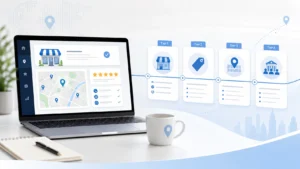
- Tier 1 – Core Directories: Google Business profile, Bing Places, Apple Maps, and Yelp. These are non-negotiable and must be 100% accurate and complete.
- Tier 2 – Industry-Specific Directories: Choose platforms relevant to your trade (home services, legal, medical, restaurants, etc.).
- Tier 3 – Local and Regional Directories: City-specific and regional directories reinforce your geographic relevance and help you in ranking.
- Tier 4 – Community and Chamber Listings: Chamber of commerce sites, local news publications and community portals provide high-trust local backlinks.
Ready to Build a Stronger Business Listing?
A complete business listing on US Local Finder helps customers discover your business by category, location, services, and contact details. Add accurate business information, choose the right category, and keep your profile updated to support your local SEO presence.