Fox Paving - Paving Contractor
Where sandy loam meets heavy clay, standard pavement specs fail because they assume uniform ground. We map your specific soil profile or sand, clay, or the messy boundary between the design base and binder accordingly. Licensed for Fort Bend County. No subcontracting. Estimates without obligation.
Fox Paving arrived in Fort Bend County over ten years ago with one rule: diagnose before you pave. As a paving contractor operating in Fulshear, TX, we refuse to quote from photographs or guess at soil conditions. Our crews carry penetrometers, moisture probes, and core samplers to every site. What lies beneath the blacktop matters more than what sits on top.
Fulshear’s geography defies simple categorization. The eastern reaches drain toward the Brazos through sandy loam that shifts like beach sand under heavy loads. Move west toward Cross Creek Ranch and the character changes entirely, fat gray clay that swells after spring rains and contracts into deep fissures by Labor Day. This duality means two neighbors on the same road may need completely different base designs. Compounding the puzzle, Fulshear’s population quadrupled between 2010 and 2025, turning cattle pastures into subdivisions before geotechnical surveys could catch up. The result is a patchwork of pavement performance: some lots holding strong after fifteen years, others crumbling before the paint dries. We map these variations block by block, adjusting aggregate depth, binder grade, and drainage slope to match whatever the ground beneath demands.
Our credentials are straightforward: Texas Department of Insurance coverage, TDLIC registration, and a written warranty on every project. From the retail corridors along FM 1093 to the winding residential lanes of Weston Lakes, we treat Fulshear, TX surfaces with the same scrutiny we would apply to our own driveways.
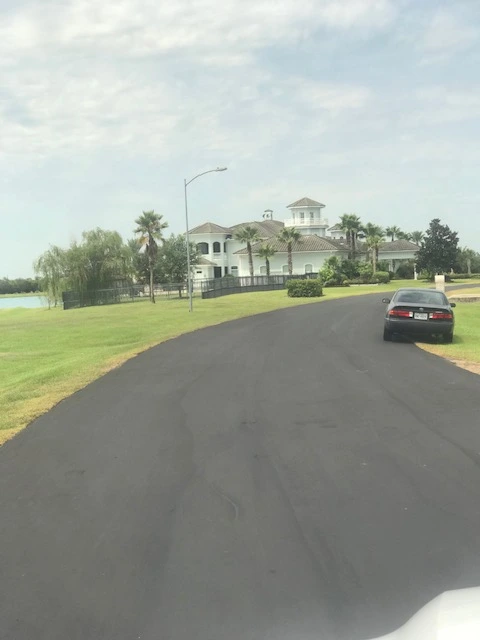
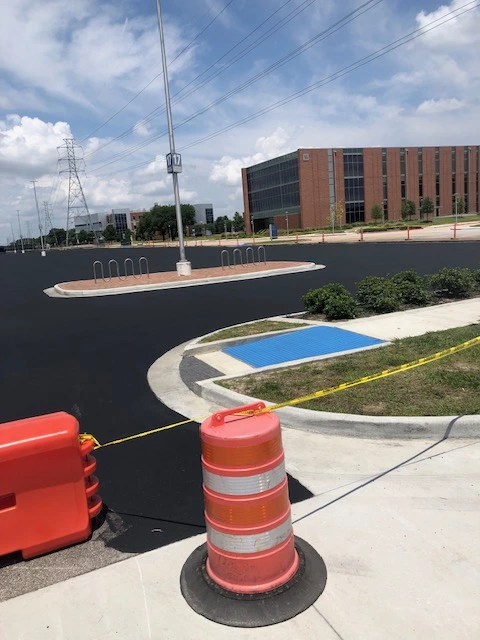
Fox Paving functions as a paving contractor throughout Fulshear, TX delivering asphalt overlays, sealcoating, crack remediation, parking lot preservation, speed table installation, and pavement marking. Each solution is calibrated for the specific soil chemistry, drainage behavior, and traffic loading that distinguish this western Fort Bend market from anywhere else in the region.
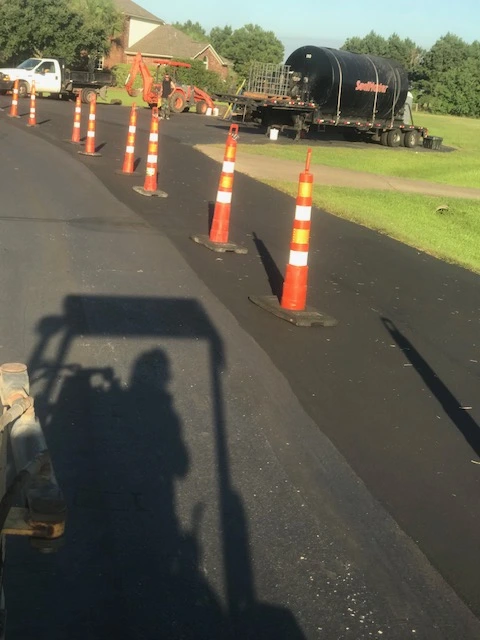
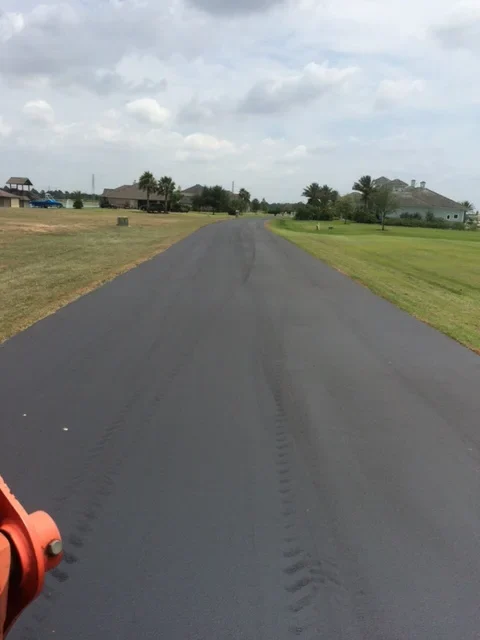
Overlaying in Fulshear, TX begins with extraction, not application. We pull core samples to determine whether the existing mat is bonded to a competent base or merely floating on saturated mush. Sandy loam zones near the Brazos often require geotextile stabilization to prevent the new layer from mirroring the old failures. Inland clay areas demand thicker base reconstruction to absorb seasonal heave. The overlay itself typically 1.5 to 2 inches of hot mix bonds to a prepared surface that has been milled, cleaned, and tacked. Benefits span 12 to 15 years of extended service when the foundation is honestly addressed, cost reductions of roughly half versus full removal, elimination of the rhythmic thumping that signals base failure, and regraded drainage that sends water toward catch basins instead of accumulating against building slabs.
Fulshear’s atmospheric chemistry punishes unprotected binder. The ultraviolet index here exceeds the national average for six months annually, breaking hydrocarbon chains and turning flexible asphalt into gray, brittle shale. Humidity compounds the damage by trapping oxidized oils at the surface. Our sealcoating formulations, coal tar emulsion for chemical resistance, asphalt emulsion for color retention are applied at rates calculated by square footage and absorption testing, not by guesswork. Sand is added for skid resistance. Benefits include a functional lifespan extension of roughly 100 percent when reapplied every 36 to 48 months, restored light absorption that keeps surface temperatures manageable, a moisture barrier that prevents the base saturation common in Fulshear’s lowlying plats, and budget predictability that replaces emergency patching with scheduled preservation.
Repair scope in Fulshear, TX depends on soil diagnosis. Sandy areas suffer from settlement and washout; clay areas heave and crack cyclically. We remove failed sections to expose the subgrade, test moisture content with a nuclear densometer, and rebuild with aggregate and binder matched to the specific failure mode. Hot mix is placed in controlled lifts, each compacted to refusal density. Benefits include the removal of liability hazards that generate tri pand fall claims, interruption of water pathways that would otherwise destroy adjacent sound pavement, restoration of load capacity for the concrete mixers and dump trucks that service Fulshear’s ongoing construction, and surgical precision that preserves undamaged areas and stretches maintenance budgets further.
Crack geometry in Fulshear, TX varies by soil type. Clay soils produce longitudinal cracks that follow the direction of traffic stress; sandy soils create block patterns from differential settlement. We rout each configuration to a uniform reservoir 0.5 inches wide, 0.75 inches deep then blast with heated air to remove the organic slurry that accumulates in Fulshear’s humid environment. The sealant is a rubberized compound with a low temperature flexibility rating that accommodates the 40degree thermal swings common in spring and autumn. Benefits include an approximate 80 percent reduction in pothole genesis, a 3 to 5 year pavement life extension with annual treatment, prevention of the root intrusion that destroys pavement from the inside out, and traffic reopening within hours rather than days.
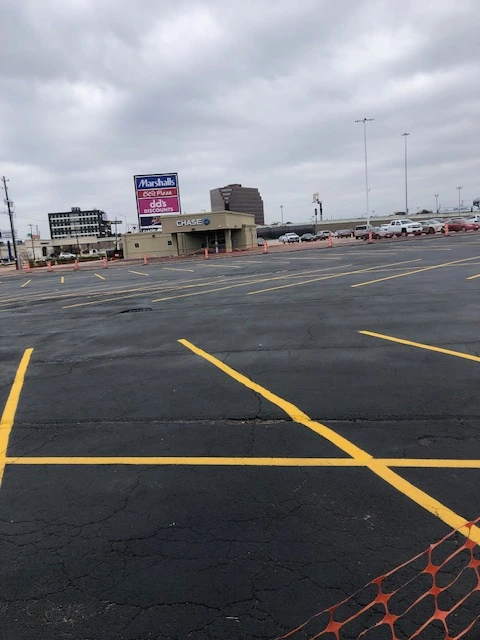
Maintenance philosophy in Fulshear, TX must account for growth velocity. A retail center that serves 500 cars today may handle 2,000 within five years as surrounding development fills in. Our programs are structured in phases: initial stabilization, preventive sealcoating at 24month intervals, crack intervention at 12month intervals, and structural reassessment every 36 months. Striping refresh is synchronized with sealcoating cycles. Benefits include pavement longevity approaching 25 years under disciplined care, sustained compliance with ADA dimension and slope requirements that evolve with regulatory interpretation, aesthetic standards that signal to prospective tenants that the property is actively managed, and the elimination of catastrophic failures that force closures and revenue loss during peak shopping periods.
Fulshear’s speed table design must reconcile conflicting demands: residential safety in family dense subdivisions, emergency vehicle access per Fort Bend County Fire Code Section 503, and the ground clearance requirements of the lifted trucks common in this market. We construct asphalt humps with a 12foot transition length, 3inch peak height, and 6foot plateau width dimensions that slow passenger vehicles without scraping low profile emergency equipment. Thermoplastic markings are applied for nighttime visibility. Benefits include documented speed reductions averaging 45 percent in controlled zones, measurable pedestrian safety improvements that reduce insurance exposure, construction durability that resists the daily pounding from delivery vehicles servicing Fulshear’s rapid retail expansion, and regulatory compliance that avoids the citation and removal orders that accompany noncompliant installations.
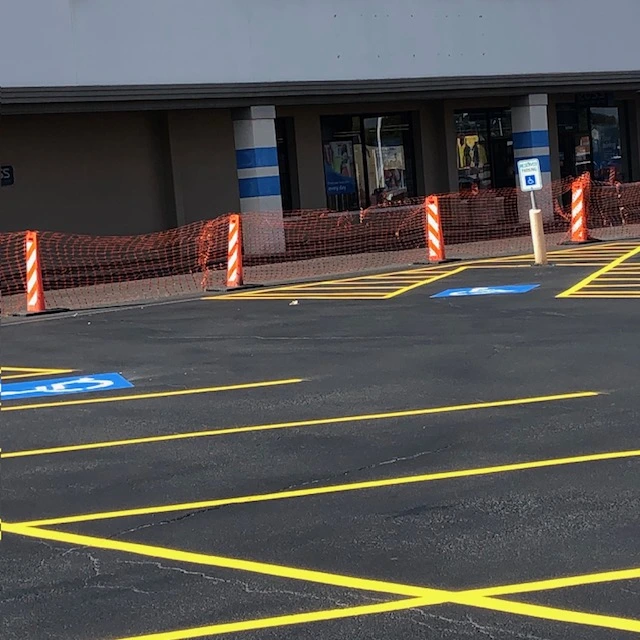
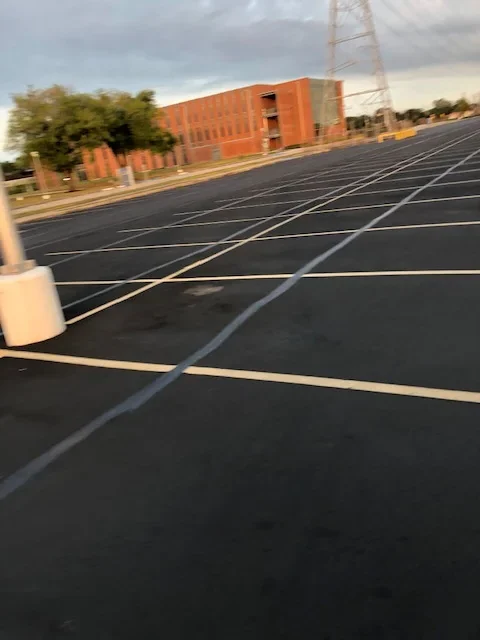
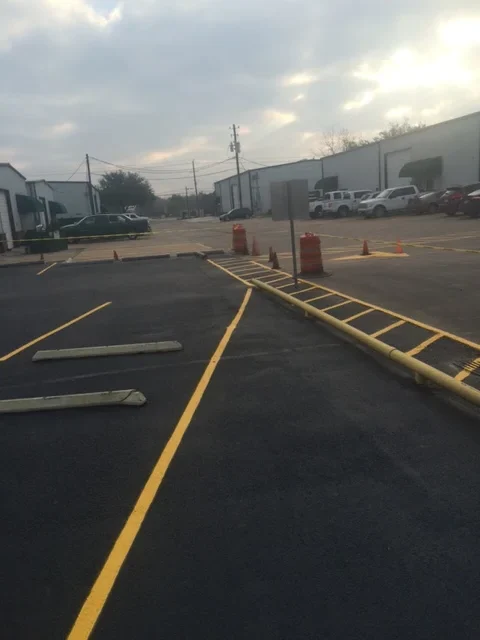
Pavement marking in Fulshear, TX degrades through a mechanism distinct from northern markets. The high humidity prevents solvent evaporation, causing standard latex paints to remain tacky and attract tire debris. UV exposure bleaches pigments within 18 months. Petroleum drips from the heavy trucks servicing construction and energy sectors dissolve unprotected binders. We specify Methyl Methacrylate (MMA) or thermoplastic materials with embedded glass beads for reflectivity, applied at 90 mils thickness for wear resistance. Benefits include ADA compliant restriping that satisfies current Department of Justice interpretation, traffic pattern optimization that reduces the conflict points where Fulshear’s high retail volume creates congestion, nighttime visibility that supports security and safety objectives, and surface longevity that matches the 3 to 4 year sealcoating cycle for synchronized maintenance.
Reach Fox Paving today for paving contractor evaluation in Fulshear, TX. Complimentary site assessment and detailed scope proposal. Address your pavement issues before seasonal expansion turns hairline cracks into structural compromise.
The sandy loam substrate settles differently, under concentrated loads, creating a grid of tension cracks that reflect the soil’s granular nature rather than the directional stress typical of clay heave. Block cracking indicates base support failure, requiring full depth reconstruction rather than surface sealing.
Standard speed bump profiles scrape lowhanging differentials and exhaust systems. We specify elongated transition slopes and reduced peak heights for Fulshear installations, maintaining traffic calming effectiveness while accommodating the vehicle modifications common in this market.
The corridor handles mixed traffic: passenger vehicles, commercial delivery, and construction equipment. The loading spectrum requires thicker base courses, heavier binder grades, and reinforced edge details that residential specifications omit. We design for the maximum anticipated axle load, not the average.
Cold snaps below 50°F prevent proper film formation and curing. We monitor extended forecasts and suspend application when nighttime temperatures drop below the manufacturer’s minimum for 48 hours. February work is possible during warm spells but requires schedule flexibility.
Efflorescence calcium carbonate and mineral salts leached from concrete curbs and limestone base aggregate by prolonged moisture exposure. It indicates water movement through the pavement structure. Sealcoating interrupts the moisture pathway; pressure washing removes the cosmetic residue.