




Most small businesses burn through marketing budgets chasing broad audiences while ignoring the single most valuable real estate on the internet, the local search results page. Google ranking for local queries is not reserved for national brands with million dollar ad spends. It is achievable for any business willing to invest in the specific signals that Google’s algorithm values for geographic relevance. The path is systematic or measurable and far more cost effective than traditional advertising. This blueprint breaks down exactly how to claim or optimize and dominate the local search landscape.
Shifting From General Marketing to High Impact Local SEO
Small business owners often mistake busyness for effectiveness. They run social media campaigns or buy print ads and sponsor community events without ever asking whether these efforts actually move the needle on Google ranking. Meanwhile, the customers who are actively searching for their services right now the highest intent buyers possible are clicking on competitors who have invested in local SEO.
The shift from general marketing to high impact local strategy requires a mindset change. Instead of broadcasting to everyone, you focus on being found by the people in your service area who need you today. Instead of chasing vanity metrics like follower counts, you track measurable outcomes, map pack appearances or direction requests, phone calls and form submissions. Google ranking for local queries delivers these outcomes consistently because the intent is built in, the searcher has already decided they need a service and are now choosing who to call.
This shift also changes how you allocate resources. A single well optimized Google Business Profile often generates more qualified leads than an entire year of social media posting. Consistent business citations across authoritative directories build more trust than a billboard. The businesses that dominate local search are not necessarily spending more; they are spending smarter by targeting the signals that actually influence Google ranking.
Step 1: Claiming the Big Four Online Business Directories
Your foundation for Google ranking starts with the four platforms that feed the most data into Google’s verification ecosystem. Google Business Profile or Yelp or Bing Places and Apple Maps. These are not optional extras. They are the primary sources Google uses to confirm your business name, address, phone number, hours, and service categories.
Claiming is only the beginning. Most businesses set up a basic profile and walk away, leaving massive optimization potential on the table. To maximize Google ranking impact, complete every available field. Add precise service categories that match what customers actually search for. Upload high resolution photos of your storefront, team or products and completed work businesses with photos receive 42 percent more direction requests and 35 percent more website clicks, according to Google data. Write a keyword rich business description that naturally incorporates your primary services and location. Set accurate hours, including holiday schedules and use the posts feature to share updates or offers and events weekly.
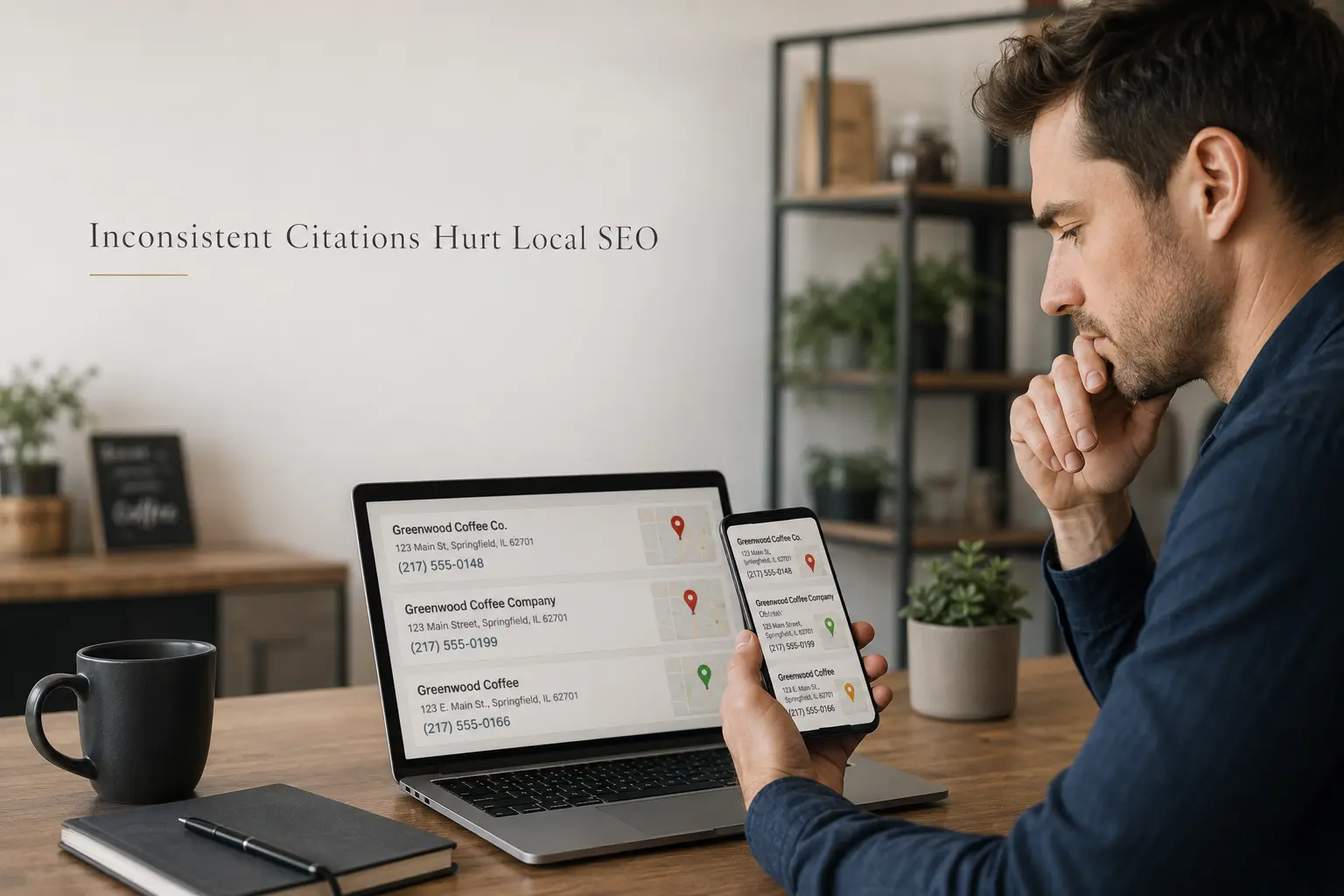
Consistency across these four platforms is critical. Your NAP must match exactly down to abbreviations or suite numbers and formatting. Any variation creates confusion that dilutes your Google ranking potential. Treat these profiles as living assets that require regular attention, not onetime setups.
Step 2: Uncovering Niche and Industry Specific Business Citations
Once your core profiles are established, expand into the online business directories that matter for your specific industry. These niche citations carry disproportionate weight because they reinforce topical relevance alongside geographic authority. A home service business should prioritize Angi or HomeAdvisor and Thumbtack. A medical practice needs Health grades, Zocdoc and WebMD. A restaurant belongs on Open Table, TripAdvisor, and Grub hub.
Industry specific business citations also attract qualified traffic that general directories miss. Someone searching Angi for an emergency plumber is further down the buying journey than someone casually browsing Yelp. These platforms filter for intent, delivering leads that convert at higher rates.
Do not overlook professional associations and local organizations. Your chamber of commerce, Better Business Bureau chapter and industry trade groups often maintain member directories that Google treats as highly authoritative. A citation from a .org or .gov affiliated site signals legitimacy that spammy directories cannot match. Building these business citations strategically strengthens your Google ranking without requiring ongoing advertising spend.
Step 3: Optimizing for the Google Map Pack Algorithm
The map pack the three business listings displayed beneath the map in local search results is where Google ranking translates directly into revenue. These positions capture roughly 44 percent of all local search clicks, with the first position alone taking nearly 25 percent. Earning placement requires understanding the specific factors that influence the algorithm.
Proximity is the foundation. Google prioritizes businesses physically close to the searcher, which is why accurate address data across all local business listings matters so much. Relevance comes next to your business categories, description or services and website content must align precisely with the search query. Prominence is the third pillar, built through review volume, review velocity, overall rating, and the breadth of your web presence.
To optimize, ensure your primary category in Google Business Profile exactly matches your core service. Add secondary categories for related offerings. Build location specific pages on your website that reinforce your geographic relevance. Earn reviews consistently not in bursts, but steadily over time. Respond to every review professionally, as engagement signals activity and customer care. Finally you need to expand your business citations across the directories and platforms that increase your overall prominence score.
Step 4: Generating and Managing Reviews on Your Local Business Listings
Reviews are the currency of local trust. They influence Google ranking or conversion rates and customer perception simultaneously. A business with 50 reviews and a 4.8star rating will outrank and outsell an identical business with 5 reviews and a 5.0 rating. Volume and recency matter as much as the score itself.
Generating reviews requires a system, not hope. Train your team to ask satisfied customers at the moment of peak happiness immediately after service completion, when the problem is solved and the relationship is warm. Make the process effortless by providing direct links to your review profiles via text or email. Follow up once for customers who do not respond initially, but avoid being pushy.
Managing reviews is equally important. Respond to every review within 24 to 48 hours. Thank positive reviewers specifically, mentioning details of their experience to show authenticity. Address negative reviews professionally and acknowledging the issue and offering to make it right. This public responsiveness demonstrates accountability and often converts dissatisfied customers into loyal advocates.
Reviews also feed back into your Google ranking. Google’s algorithm tracks review velocity, keyword mentions in review text, and owner response rates. A steady stream of fresh, detailed reviews signals an active, reputable business that deserves prominent placement.
Ready to Supercharge Your Google Ranking? Let’s Build Your Strategy.
Achieving dominant Google ranking is not a mystery. It is a methodology. Claim the right platforms. Optimize every field. Build consistent business citations across niche and general directories. Earn and manage reviews systematically. Monitor or adjust and expand over time.
The businesses that own local search in your market are not doing anything you cannot replicate. They simply started earlier and stayed consistent. The gap between where you are and where they are is measured in effort, not magic.
At SearchNova360, we specialize in accelerating this process for small businesses. We audit your current local business listings, identify the gaps and inconsistencies that suppress your Google ranking, and implement a comprehensive strategy that covers every platform, every citation, and every review opportunity. Our team handles the technical work so you can focus on serving the customers we help you attract.
Google ranking is not a luxury for businesses with, extra budget. It is the essential foundation of modern customer acquisition. The searchers looking for your services right now will not scroll past the map pack to find you. They will call the business that appears first.
Conclusion
Dominating Google ranking through local business listings is the most direct, cost effective growth strategy available to small businesses today. It requires no massive ad spend, no viral content, and no luck. It requires precision, consistency, and the willingness to treat your digital presence as a core business asset rather than an afterthought.
Start with the big four directories. Expand into industry specific online business directories. Optimize for the map pack algorithm. Build review volume and respond with care. And if the workload exceeds your capacity, partner with professionals who live this work every day.
Ready to dominate? Visit SearchNova360.com and claim your verified listing. Let’s build the Google ranking strategy that puts your small business where it belongs: first.
FAQs
How do I improve my Google ranking fast?
Focus on claiming and optimizing your Google Business Profile, fixing NAP inconsistencies across all local business listings, and generating a steady stream of reviews. These are the fastest levers for Google ranking improvement because they signal immediate relevance and trust to the algorithm.
Do business citations directly impact search positions?
Yes Business citations are a core ranking factor for local SEO. Consistent, widespread citations across trusted online business directories verify your legitimacy to Google and directly influence your visibility in local search and map pack results.
How many business directories for small businesses should I submit to?
Start with the essential four Google, Yelp, Bing, Apple Maps then add 5 to 10 industry specific business directories for small businesses and local guides. Quality and consistency matter more than quantity; 15 accurate listings outperform 50 messy ones.
What causes a sudden drop in local Google ranking?
Sudden drops usually stem from NAP changes, lost or suspended listings, a wave of negative reviews, competitor optimization, or algorithm updates. Check your business citations for inconsistencies and your Google Business Profile for guideline violations first.